
Curious how Cleveland manufacturing companies can protect their production networks without replacing legacy equipment? Let infinIT explain the best strategy.
In This Article:
- Why Is Production Network Security Different From Office IT Security?
- How Do You Secure Legacy Equipment You Can’t Afford to Replace?
- What Does A Smart Network Isolation Strategy Look Like?
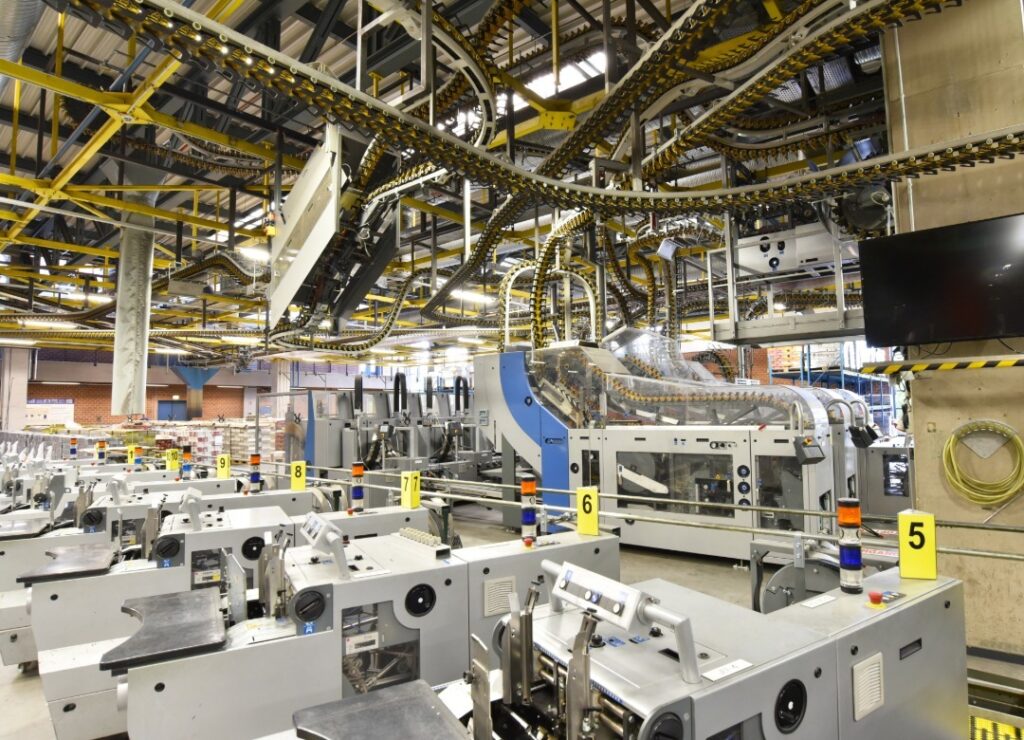
Walk through almost any manufacturing facility in the Warren or Youngstown area and you’ll likely find that there’s million-dollar production equipment running Windows XP or Windows 7. It’s not negligence. It’s math. Updating the software on a single CNC machine or automated line can cost $50,000 or more. That’s before you factor in downtime.
The problem is that even if you can’t replace it, you do still need to protect it. Production networks that aren’t properly secured are a liability. A ransomware attack that locks up your office computers is painful. One that reaches your production floor, it’s catastrophic.
This is one of the more complicated IT challenges in manufacturing, and it’s one that a lot of general IT providers get wrong. The solution can’t be to force expensive equipment upgrades. You need a security strategy built around the reality of your floor.
Why Is Production Network Security Different From Office IT Security?
Most small business cybersecurity conversations focus on the office environment, addressing email phishing, endpoint protection, and password policies. That’s important work. But manufacturing can add a layer that most IT providers aren’t equipped to handle.
Production equipment operates on its own logic. The software that runs these machines was often built specifically for older operating systems. It simply won’t run on anything newer. That’s why you’ll find Windows XP or Windows 7 on a machine that otherwise works perfectly. Replacing the operating system means replacing the software that controls the machine, and that can be incredibly expensive. The machine itself isn’t the problem, so there’s no real reason to touch it.
The security risk is in the connection between that machine and the rest of your network. If your production equipment is sitting on the same network segment as your email server and your accounting software, you have a problem (regardless of how old or new the hardware is).
How Do You Secure Legacy Equipment You Can’t Afford to Replace?
You secure legacy equipment with isolation. This is where a good IT partner brings value to the table with manufacturing clients.
Network segmentation means separating your production environment from your business environment at the network level. Your CNC machines, your PLCs, and your SCADA systems live in their own protected segment. They can do their job. They just can’t talk to the rest of your network in ways that create exposure.
This doesn’t require replacing anything. It requires thoughtful network architecture, properly configured firewalls, and ongoing monitoring to make sure the boundaries hold. It requires a maintained posture. Done right, it lets you keep running the equipment that runs your business while still meeting a reasonable security standard.
What Does A Smart Network Isolation Strategy Look Like?
In practice, network isolation for a manufacturing environment typically involves a few key elements. Your production systems get segmented into their own VLAN. This is a virtual network that keeps them separated from your business systems. Firewall rules define exactly what traffic is allowed to cross between segments, and that list is kept deliberately short. Monitoring is in place to catch anything unexpected.
The aim here is a defensible posture that limits your exposure and gives you visibility when something unusual happens. If a threat gets into your business network, isolation keeps it from walking straight onto your production floor. If something goes wrong on the production side, you have controls that keep it contained.
For manufacturers in Northeast Ohio, this matters more than ever. Cyber threats targeting industrial environments are increasing. The assumption that your company is too small to be a target has been wrong for years. Attackers don’t discriminate by company size. They look for vulnerabilities, especially where they can catch a company off guard.
Working with an IT provider that understands the manufacturing environment means you don’t have to choose between operational reality and security. You get a strategy built around both.
→ If your production network hasn’t been reviewed recently, it’s worth having that conversation. Reach out to the infinIT team to talk through what a manufacturing-focused security assessment looks like.
TL;DR: Manufacturing IT Security in Cleveland
Production networks in manufacturing present unique security challenges, especially when legacy equipment can’t realistically be replaced. The right strategy works around that reality, not against it.
Why can’t manufacturers just update their legacy systems?
- Production equipment running Windows XP or Windows 7 is common and often intentional
- Updating control software on industrial machinery can cost $50,000 or more per machine
- Downtime required for updates can disrupt production schedules significantly
- In many cases, manufacturers are still running equipment the original software vendor no longer supports
What’s the right approach to securing equipment you can’t replace?
- Network segmentation isolates production systems from business systems at the network level
- Properly configured firewalls define and enforce the boundaries between environments
- Legacy equipment can keep running without exposing the broader network to unnecessary risk
- Ongoing monitoring so the isolation holds over time
What should Northeast Ohio manufacturers look for in an IT partner?
- Experience with OT/IT environments specifically
- A strategic methodology that doesn’t push unnecessary hardware or software replacement
- Local presence and fast response time, as production downtime can’t wait for a remote ticket queue
- Clear communication throughout the whole support process